
As product management recruitment specialists, we spend our days talking to the people building digital products. Over the past year, those conversations changed. Candidates started arriving at interviews with working software they had built themselves using AI, and clients started asking us how to assess skills that barely existed two years ago.

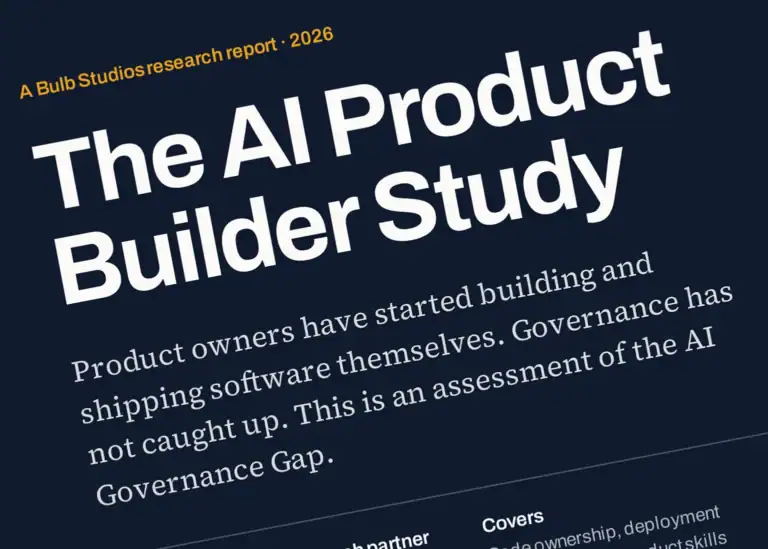
So we decided to find out how widespread AI product building had become. We partnered with digital product studio Bulb Studios on the AI Product Builder Study, opening our database of 70,000 product professionals to the research. 2,251 of them responded.

What the study found about AI product building

The headline finding is the gap between what product people are building with AI and how confident they feel about putting it live.

  • 62% have used AI to build a working application or product feature, with a further 9% reviewing or experimenting
  • 27% have shipped AI-generated software without engineering review
  • 31% do not know who legally owns AI-generated code
  • 15% feel confident deploying AI-generated software into production
  • One in three say they could build an MVP without developers
  • Nearly half believe coding will become a core product management skill within five years

Four times as many product professionals are building with AI as feel confident putting the result live. Bulb Studios calls this the AI Governance Gap.

What is vibe coding, and why does it matter for hiring?

Vibe coding is building software by describing what you want to an AI tool in plain language and letting it generate the code. For product managers, designers and founders, it means an idea can become a working prototype in an afternoon, without waiting for an engineering team.

That changes what a strong product candidate looks like. It also changes what employers need to screen for.

"The ability to turn an idea into a working prototype without waiting for engineering is quickly becoming one of the most valuable skills a product leader can demonstrate. Vibe coding is helping candidates stand out in the recruitment process. But understanding AI has to mean more than knowing which tool to open. Employers want people who can explain what the model produced, where the risk sits, what they would hand to engineering and what they would never ship. Fluency without judgement is a liability."
Doug Bates
Doug Bates
Co-founder of Intelligent People
What this means for product recruitment

If hiring processes reward speed of building alone, organisations will recruit more of the behaviour the study flags: prototypes shipped without review, and code nobody can confidently say they own.

In the product management and product design and UX roles we recruit for, the capability worth screening for is AI judgement, knowing what to build with AI, and knowing what not to ship.

The full report includes five questions organisations can use to close their own governance gap, along with the complete findings.

Download the AI Product Builder Study 2026

An annual study

The AI Product Builder Study will run every year. We expect the share of product people building with AI to keep rising. The figure we will be watching is the 15% who feel confident deploying what they build.

If you are hiring product talent and want to talk about what these findings mean for your team, get in touch. If you are a product professional building with AI, send us your CV.

Related articles
The Ai Product Builder Study